
Six months ago you got a raise. It should have meant breathing room — an extra cushion at the end of the month, maybe the start of a real emergency fund. Instead, you’re checking your balance the same way you did before, still landing in roughly the same spot by the time the next payday rolls around. Nothing dramatic happened. No single bad decision caused it. That’s lifestyle creep, and it’s almost invisible while it’s happening.
Lifestyle creep — sometimes called lifestyle inflation, and closely related to what’s often described as spending creep — is the tendency to let spending rise to match any extra income, quietly, a little at a time, until the extra income has vanished into a slightly nicer version of exactly the same financial position you started in.
What lifestyle creep actually is
It rarely arrives as one big purchase. It’s the coffee that goes from instant to a daily flat white. The takeaway that becomes twice a week instead of once. The subscription tier that gets upgraded because “it’s only a few pounds more.” None of these decisions look reckless in isolation — that’s precisely what makes the pattern so hard to notice while it’s forming.
The mechanism is simple: when financial pressure eases, even slightly, the instinct to relax follows almost immediately. A little extra breathing room gets spent on a little extra comfort, and that new spending level quickly becomes the new normal — the baseline you’d feel a pinch dropping back below, even though a year ago it would have felt like plenty.
Why it happens to high earners too
Lifestyle creep isn’t a low-income problem or a poor-discipline problem — it scales with income just as easily as it scales with a modest pay rise. Financial advisors who work with professional athletes have long pointed to this exact pattern: a rookie contract triples someone’s income overnight, and within a few years a portion of that same cohort is in real financial trouble, not because they earned too little, but because spending expanded to match — and then some.
The same dynamic shows up, at a smaller scale, in ordinary career progression. A promotion brings a 15% pay rise; within a year, rent, car payments, and everyday spending have crept up by roughly the same amount, and the sense of financial ease that should have followed the raise never quite arrives.
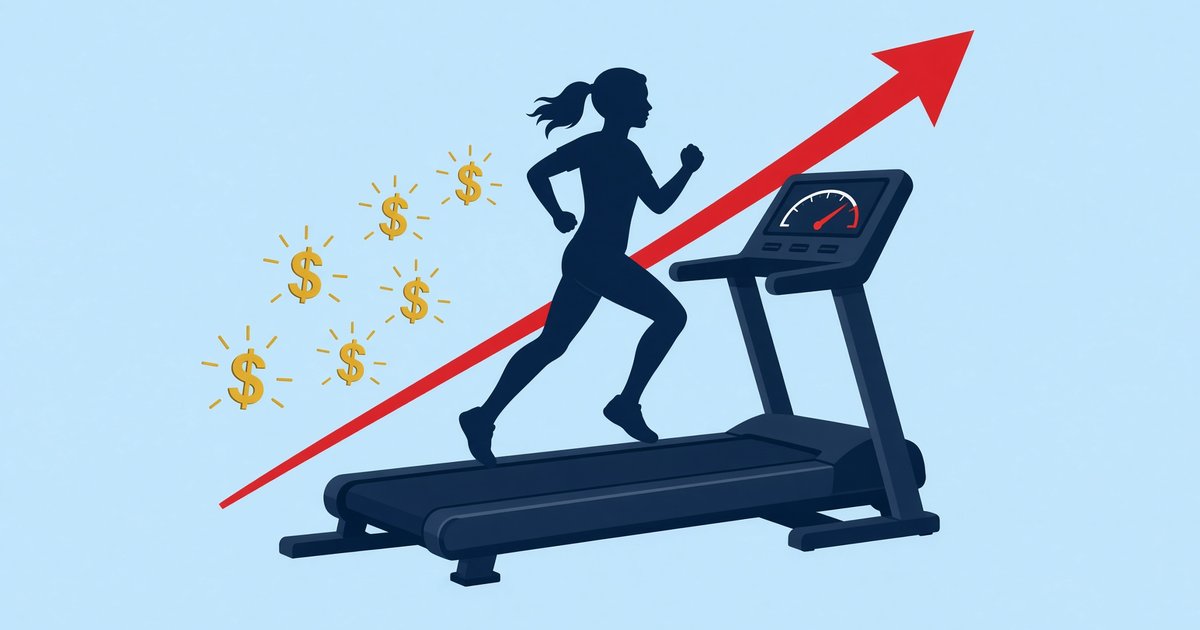
The small stuff is the real culprit
Ask most people to name their biggest financial risk and they’ll point to something dramatic — a job loss, an emergency, a bad investment. Lifestyle creep rarely gets mentioned, because it doesn’t feel like a risk. It feels like small, reasonable upgrades, each one easy to justify on its own.
That’s exactly why it’s so effective at eroding a raise. A single large purchase gets scrutinised — you’d think twice about it, maybe budget for it in advance. A £4 coffee upgrade, a £15 subscription bump, an extra takeaway each week — these fly under the radar precisely because no individual decision looks big enough to worry about. Add them up over a year and they can easily account for the entire value of a modest raise.
It’s a lot more fun to spend on dinners out than to funnel money into debt repayment or a pension — which is exactly why lifestyle creep is so easy to fall into and so rarely noticed until the raise has already disappeared.
It starts before the money even arrives
One of the stranger features of lifestyle creep is that it can begin before the extra income even lands. Knowing a raise or bonus is coming is often enough to loosen spending in the weeks beforehand — a bigger holiday gets booked, a bill gets paid off “because there’s more coming soon anyway.” By the time the actual payment arrives, some of it has effectively already been spent against.
This anticipatory spending is worth watching for specifically, because it undermines the one moment — the arrival of new money — that would otherwise be the easiest point to redirect some of it deliberately, before it blends into your regular spending pattern and becomes invisible.
The 50/50 rule for raises and windfalls
The fix isn’t to refuse every lifestyle improvement that comes with more income — that’s neither realistic nor necessary. It’s to decide, in advance, what share of any increase goes toward progress rather than spending. A straightforward split works well for most people: 50% toward debt reduction, savings, or investing, and 50% free to spend on genuine lifestyle improvement, guilt-free.
If you’re carrying high-interest debt — credit cards in particular — it’s worth tilting that split further, putting more like 70–80% of any increase toward paying it down. The lifestyle improvement will feel far more solid once that debt is gone, and you’ll get there faster than a 50/50 split would manage.
The moment a raise or bonus lands is the single easiest point to make this decision, because the money hasn’t yet blended into your regular account and become invisible spending. Set up the split before the first payday at the new amount, even something as simple as an automatic transfer, and lifestyle creep loses most of its power — you still get to enjoy the raise, you just also keep some of it. For a more granular way to find that spare 50%, see our guide to the 5% rule.
Enjoy the raise. Just decide, on purpose, how much of it you’re actually keeping — before your spending quietly decides for you.